
What Is a Dedicated Server?
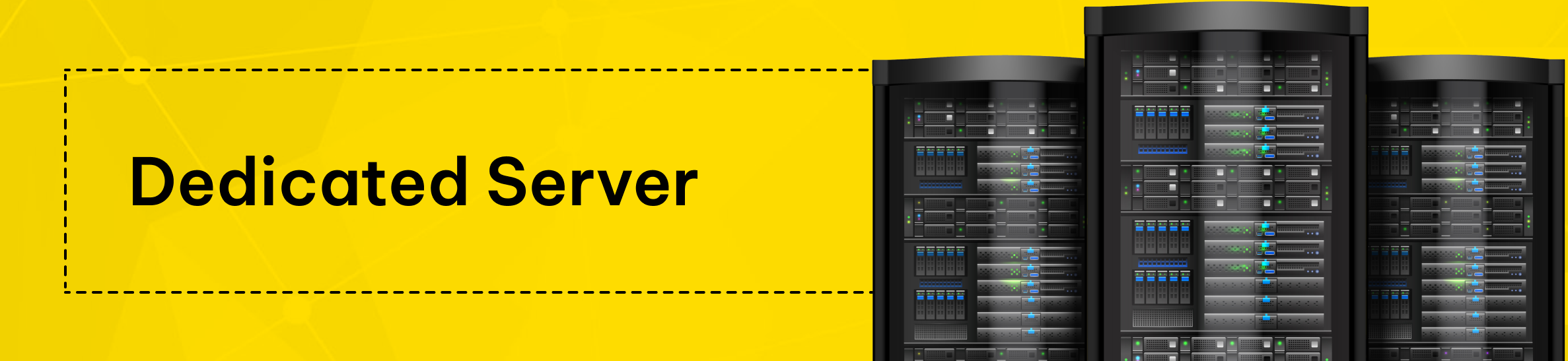
A dedicated server is a physical machine allocated to a single customer. All computing resources CPU, RAM, storage, and bandwidth are exclusively yours.
Unlike shared hosting, where multiple websites share the same hardware, a dedicated server eliminates resource competition. A VPS runs as a virtual instance on shared hardware. In contrast, a dedicated server provides complete hardware isolation.
In simple terms:
- Shared hosting → Many users, limited control
- VPS → Isolated environment, shared hardware
- Dedicated server → One customer, one physical server
This means better performance stability and deeper customization flexibility.
Performance and High Resource Availability
The most immediate benefit of a dedicated server is high performance.
Because no other tenants consume CPU or RAM, your applications experience:
- Stable processing power
- Predictable disk I/O
- Lower latency
- Consistent bandwidth usage
For e-commerce stores, agencies managing multiple client projects, and SaaS platforms, this stability directly impacts revenue.
If your business runs a heavy web server stack or database-intensive workloads, resource isolation becomes critical.
Why Performance Matters for Online Businesses
An online business loses credibility when pages load slowly or systems crash during peak hours.
Campaign traffic, product launches, or seasonal sales can overload shared environments. With a dedicated server, you can plan capacity more precisely because you don’t share resources.
Security and Full Control Over the Server
Security is one of the strongest arguments for choosing a dedicated server.
When you rent a dedicated server inside a professional data center, your infrastructure benefits from:
- Physical security
- Network-level isolation
- Custom firewall configurations
- Controlled administrative access
More importantly, you gain full control over the server.
You decide:
- Which operating system to install
- Which security policies to apply
- How access permissions are structured
- How data is encrypted and stored
Storing customer data without encryption or proper access control can create serious legal and reputational risks. A dedicated server gives control but security responsibility remains yours. Always implement structured backup and monitoring policies.
Flexibility and Customization
A dedicated server is not limited by predefined templates.
You can:
- Install your preferred operating system
- Deploy custom software stacks
- Configure advanced network settings
- Run virtualization layers to create internal virtual instance environments
This level of flexibility is rarely possible in standard web hosting packages.
Server Administration and Server Management
With freedom comes responsibility.
A dedicated server requires:
- Routine updates
- Patch management
- Log monitoring
- Backup validation
- Performance tracking
This is where professional server administration and structured server management processes become essential.
Root-level access provides powerful flexibility, but incorrect configurations can lead to downtime or vulnerabilities. If you lack in-house expertise, consider managed support.
Dedicated Hosting vs Virtual Server
Many businesses upgrade from shared hosting once they hit resource limits.
Here’s a practical comparison:
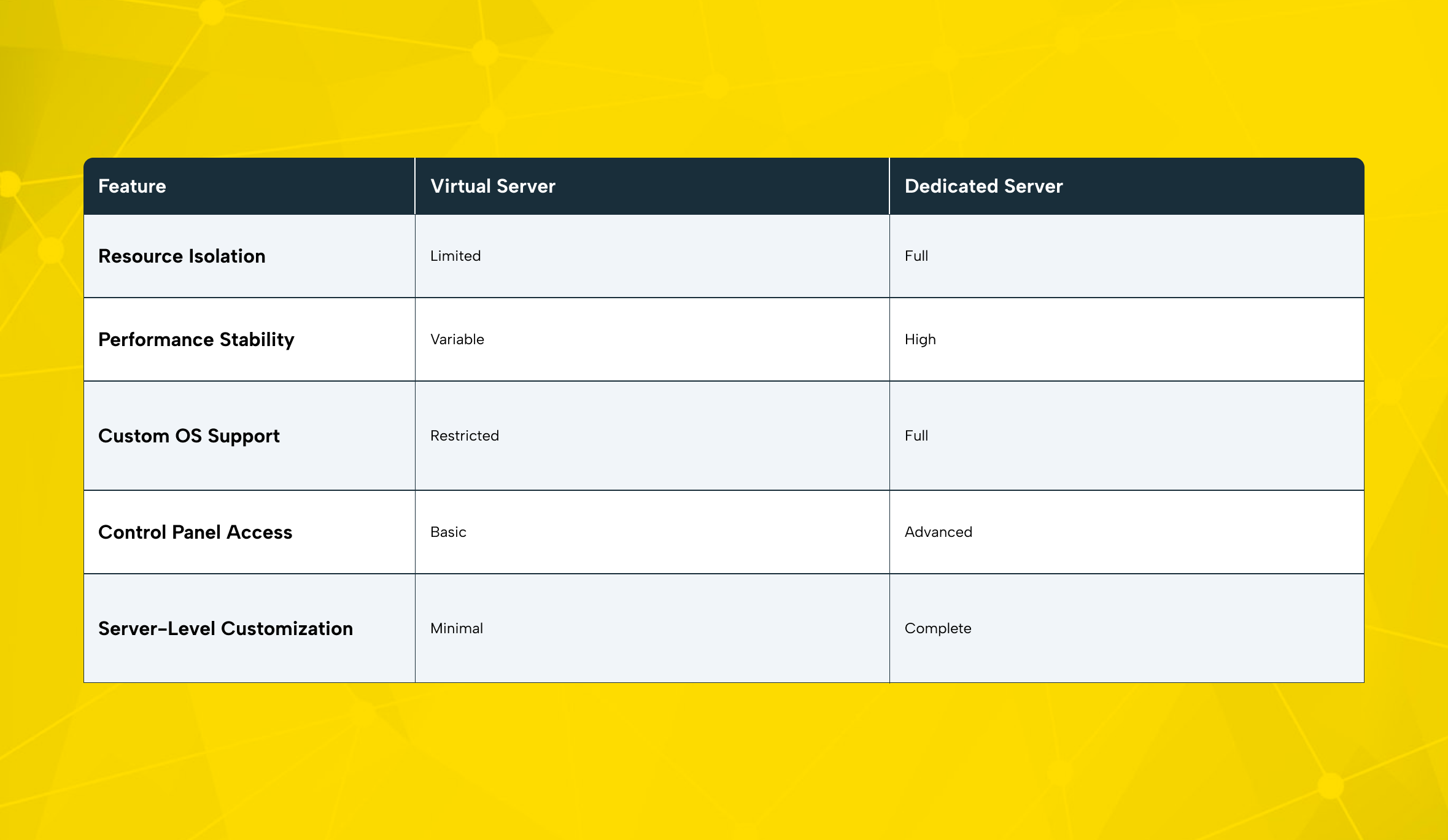
If your workload is growing, dedicated hosting becomes the logical next step.
The Makdos Advantage in Dedicated Server Hosting
Infrastructure quality matters as much as hardware power.
Makdos operates across three data centers with high-capacity uplink connectivity and redundant network architecture. This ensures stable hosting service delivery for production workloads.
What differentiates Makdos:
- Infrastructure managed through a 100% local CRM automation system
- Mobile access for remote monitoring
- 24/7 technical support
- Optional DDoS protection and firewall layers
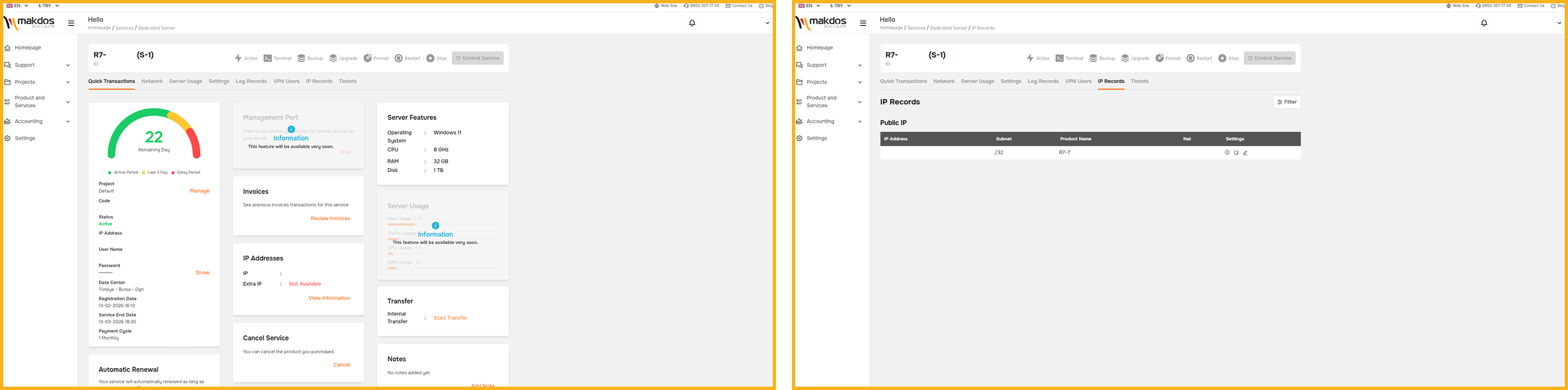
Technical Insight: Makdos Control Panel
A structured control panel simplifies daily operations.
Through the Makdos interface, users can:
- Reboot or power-cycle the server
- Monitor CPU, RAM, and storage usage
- Reinstall the operating system
- Manage basic network configurations
This reduces operational friction and shortens incident response time.
When choosing a dedicated server configuration, leave at least 30–40% growth margin in RAM and storage planning. Scaling reactively during peak load is riskier than preparing ahead.
Who Should Use a Dedicated Server?
A dedicated server is ideal for:
- Growing e-commerce companies
- Agencies hosting multiple high-traffic projects
- Financial or regulated platforms
- SaaS applications
- Businesses with strict security requirements
If your infrastructure requires predictable performance and strong isolation, your hosting choice becomes critical. In that case, dedicated hosting is more than a technical upgrade it is a strategic decision.
Next Step
If shared hosting limits are impacting your performance or security, your infrastructure may no longer fit your needs. It may be time to consider a dedicated server setup.
Explore Makdos Dedicated Server Hosting options and build an infrastructure that scales with your business needs.