

This guide explains how reseller hosting works. It also explains how WHM and cPanel work. We also explain what white label truly means.
In addition, we show how agencies, SMBs, and entrepreneurs can turn reseller web hosting into a scalable business model. You’ll also see how Makdos supports resellers with strong infrastructure and reliable day-to-day management.
What Is Reseller Hosting?
Reseller hosting is a business model. You lease server resources from a hosting company and divide them into individual hosting accounts for your customers.
Instead of maintaining hardware, managing operating systems, or dealing with network infrastructure, you focus on:
- Packaging services
- Setting pricing
- Managing clients
- Providing first-line support
In practice, reseller hosting expands on the shared hosting model. Shared hosting usually provides one hosting account per user. In contrast, a reseller hosting account lets you create and manage multiple sub-accounts under a single master account.
This makes it ideal for:
- Agencies
- Designers developers
- IT consultants
- Businesses managing multiple websites
How Does Reseller Hosting Work?
Reseller hosting works by dividing and allocating server resources across multiple accounts.
When you purchase a reseller hosting plan, you receive a predefined resource pool that may include:
- SSD/NVMe disk space
- Monthly bandwidth
- Email capacity
- Database limits
- CPU/RAM allocation
From there, you create separate hosting accounts for each client.
How the System Works in Practice
- The hosting company manages the physical infrastructure.
- You receive reseller-level access (commonly WHM).
- You create and manage client accounts.
- Clients use their own control panel (typically cPanel).
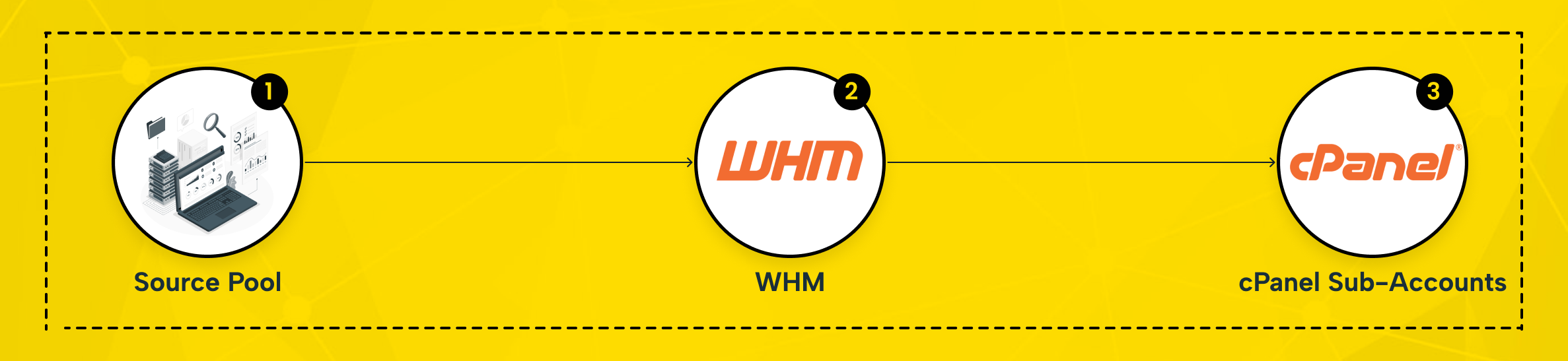
This structure ensures isolation between customers while giving you centralized control.
WHM and cPanel: The Core Control Panel Structure
In most Linux-based reseller web hosting environments, the architecture includes:
- WHM (Web Host Manager) – Used by the reseller
- cPanel – Used by the end customer
With WHM, you can:
- Create hosting accounts
- Define package limits
- Suspend or unsuspend accounts
- Monitor usage
- Manage DNS settings
Your clients log into cPanel to manage:
- Website files
- Email accounts
- Databases
- SSL certificates
This layered control panel structure is what makes reseller hosting scalable.
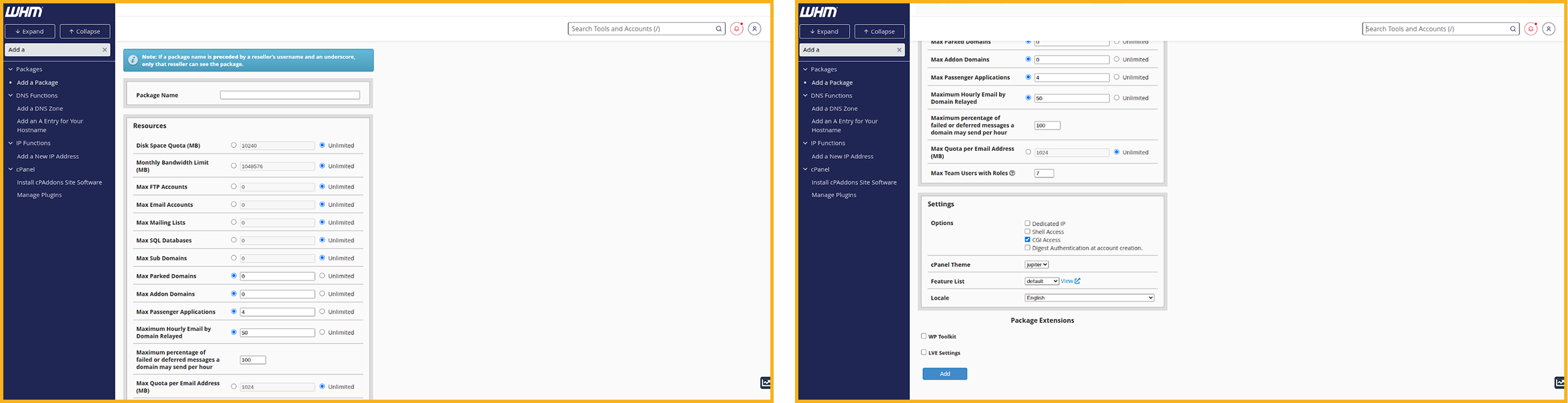
Creating a Reseller Hosting Account in WHM
- Go to “Add a Package”
- Define disk, bandwidth, and email limits
- Save the package
- Create a new hosting account
- Assign the package to the domain
This process allows you to quickly deploy hosting accounts for new customers.
White Label Hosting and Private Nameservers
One of the most attractive features of reseller hosting is the white label model.
White label means your customers see your brand not your provider’s.
You can configure:
- Private nameservers
- Custom DNS branding
- Branded client communication
Example:
- ns1.yourbrand.com
- ns2.yourbrand.com
This allows you to offer web hosting services professionally under your own identity.
Advantages of Reseller Hosting
Reseller hosting offers a balanced combination of control and simplicity.
1. Low Entry Barrier for a Web Hosting Business
You can start a web hosting business without investing in physical hardware or data center infrastructure.
2. Recurring Revenue Model
Monthly hosting renewals create predictable cash flow.
3. Centralized Management
Multiple hosting accounts are managed from one interface.
4. Built-In Infrastructure Reliability
You benefit from your provider’s uptime, security, and platform stability.
If you already offer web design, bundle it with reseller hosting. Combining web design and hosting increases client retention and lifetime value.
Potential Limitations and Risks
Reseller hosting is powerful, but it has boundaries.
Resource Limits
Your reseller hosting account is limited by your allocated resource pool.
No Root Access
You do not control the underlying server at the operating system level.
Provider Dependency
Your service quality depends on the hosting company you choose.
Avoid overselling resources. Unrealistic “unlimited” promises can damage performance and customer trust.
Weak passwords or poor access control can compromise all hosting accounts under your reseller structure. Always require strong login security and follow structured backup practices.
Who Should Use Reseller Hosting?
Agencies and Designers Developers
If you manage multiple client websites, reseller hosting simplifies deployment and billing.
SMBs Managing Multiple Sites
Companies running corporate sites, landing pages, and ecommerce stores can centralize management.
Entrepreneurs Building a Hosting Company
Reseller hosting is often the first step before moving to VPS or dedicated infrastructure.
Reseller Hosting vs Shared Hosting
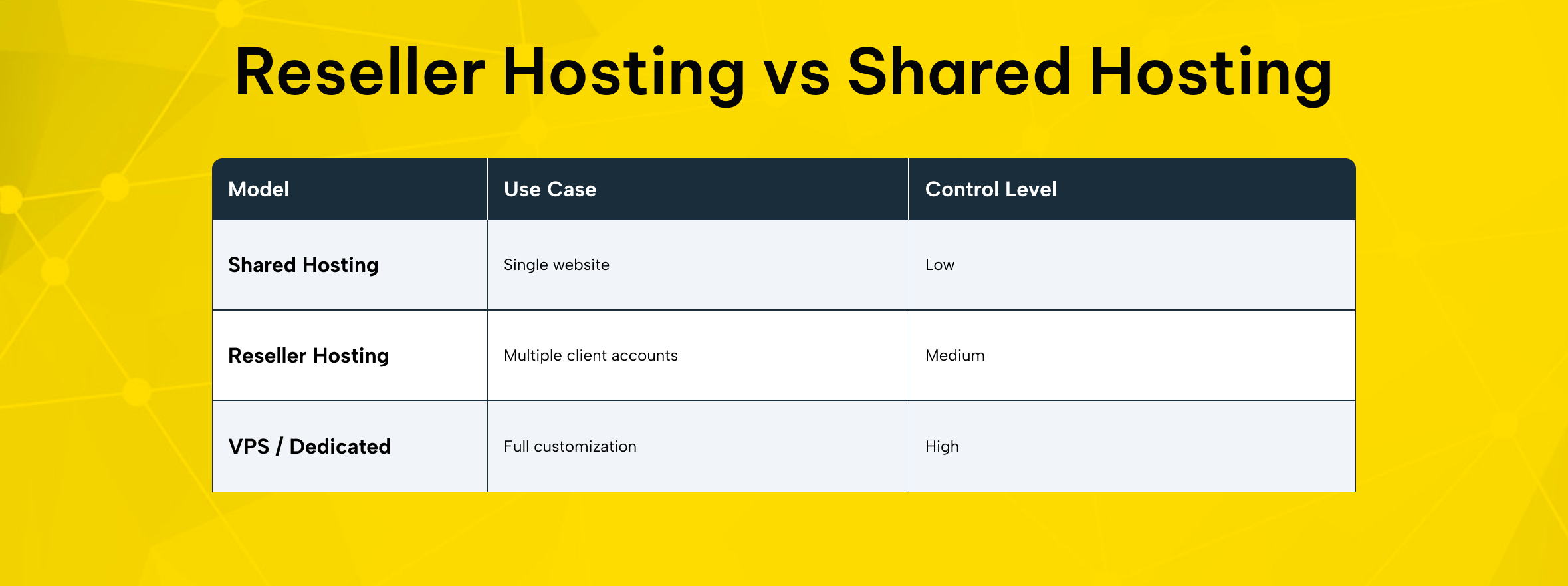
Reseller hosting fills the gap between shared hosting and full server ownership.
Why Choose Makdos for Reseller Hosting?
Makdos provides reseller hosting built on a strong infrastructure foundation:
- 3 data centers
- 20 Gbps uplink network capacity per data center.
- 99.8% uptime guarantee
- SSD/NVMe storage performance
- DDoS protection
- Daily backups
As a hosting company with its own locally developed CRM infrastructure, Makdos delivers consistent system performance and scalable support.
Makdos stands out as one of the first hosting providers in Türkiye to offer mobile app-based management.
If you want to expand your reseller web hosting operation, focus on reliability and solid technical support. Makdos offers a structured and scalable environment to help you grow.
Built for long-term growth. The structure allows you to scale step by step over time. The structure supports sustainable expansion over time.
Conclusion
Reseller hosting provides a practical way to offer web hosting services under your own brand without managing physical servers. It combines centralized control, recurring revenue potential, and manageable technical complexity.
For agencies, designers, developers, SMBs, and entrepreneurs, this model provides a clear structure. It offers a lower-risk path to building a scalable web hosting business.
If you plan to expand your services, consider offering hosting under your own brand. Start by exploring Makdos reseller hosting solutions. Then evaluate which reseller hosting plan best fits your growth strategy.