
For many businesses, the domain decision feels small at first. In reality, it affects discoverability, trust, email consistency, vendor flexibility, and how easily customers remember your brand. That matters whether you run a small company website or an e-commerce storefront. It also matters if you manage a corporate portal or multiple client projects under one agency account.
The Turkish source article rightly frames the domain as the first practical step in building a website. That same idea still applies in English. Before content, campaigns, or infrastructure, you need a name that people can remember and systems can recognize. A good domain supports branding, while the wrong choice can create confusion, renewal risk, or unnecessary migration work later.
What a Domain Name Actually Does
A domain name is the human-friendly label that points people to a resource on the internet. Instead of asking customers to remember an IP address, you provide a clear and recognizable web address like yourbrand.com.
ICANN defines a domain name as a text-based identifier made up of sections separated by dots. The Makdos source article explains the same idea in practical terms. A business domain turns a hard-to-remember server address into something branded and easy to use.
That is why the domain is not just a technical asset. It is part of your digital identity. When customers see a clean domain on your website, ads, and email signatures, it signals continuity and ownership.
A professional mailbox such as info@yourbrand.com also carries more authority than a generic free inbox, especially for B2B communication, proposals, and transactional messages. The original Makdos article highlights this aspect of business credibility. It is also one of the main reasons companies invest in a domain strategy early on.
In practical terms, the right domain should be easy to read, easy to pronounce, and closely tied to your brand or offer. If you want to choose a domain that scales with your company, think beyond today’s launch. Consider how it will look on packaging, in search ads, on invoices, and across international campaigns. The best domain names reduce friction every time someone tries to find you online.
How Domain Names Work Behind the Scenes
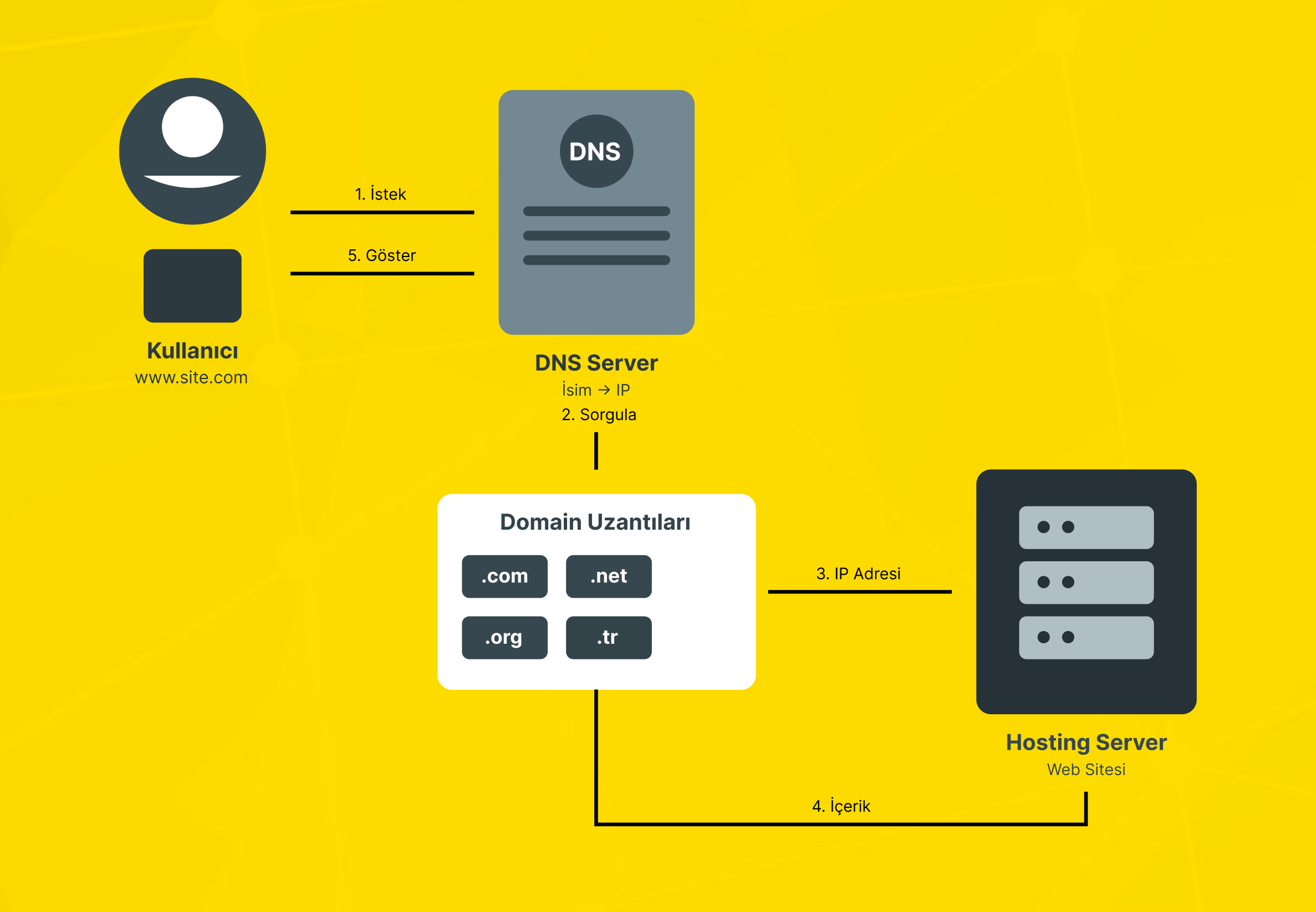
To understand domains properly, you need to understand DNS. ICANN explains that the Domain Name System links a text-based name to its IP address. This allows users to navigate the internet without having to remember numeric addresses.
When someone enters your domain into a browser, DNS identifies the correct server. In most cases, this happens within milliseconds. The Makdos source article follows the same logic. It correctly presents DNS as the system that makes domains usable at scale.
There are also important role distinctions. A domain registrar is the company that processes registration and ongoing management under its commercial and policy framework. A registrant is the person or business that legally holds the domain.
ICANN notes that a registrant enters into a contract with a registrar. After that, the provider manages the domain. Many businesses compare several domain registrars before choosing a provider. Price matters, but DNS control, renewals, transfers, and account security matter just as much.
Put simply, registration is the process of reserving a unique name for a fixed period. A provider handles the transaction and manages the related settings. So when people say they want to register a domain, they usually mean three separate steps. First, they check availability, submit the ownership details, and set up DNS for the right service.
The DNS records most businesses usually need
- A record: Points a domain or subdomain to an IPv4 address
- CNAME: Maps one hostname to another canonical hostname
- MX: Tells the internet which servers should receive email for your domain
- NS / nameservers: Define which DNS servers are authoritative for the zone
- TXT: Often used for verification, SPF, DKIM, and related service records
For most business websites, DNS does not need to be complex. It just needs to be correct, documented, and easy to manage.
Domain Extensions and Top Level Domains
Every domain ends with a suffix such as .com, .org, .net, .app, or .tr. These suffixes are called top level domains, and IANA maintains the authoritative root zone data for delegated TLDs.
In simple business terms, the extension tells users something about your market focus, positioning, or intended audience. Even so, it does not define the entire brand on its own.
Some extensions still carry strong conventions. .com remains the default choice for broad commercial use. ".org" is still strongly associated with nonprofit or mission-led organizations. ".net" continues to be used as a general purpose alternative.
Newer extensions such as .app or .io can work well for software products, digital tools, and startup-style branding. The best domain extension is the one that matches your market, brand style, and geographic reach.
For companies serving Turkey specifically, .tr is often worth serious consideration. IANA’s delegation record identifies .tr as Turkey’s country-code top-level domain and lists BTK as the responsible authority.
TRABİS operates the official “.tr” domain system and provides the related services. That does not mean every Turkish business must use .tr, but it does mean local targeting and trust signals may justify it depending on your brand and customer base.
If your audience is global, a .com domain often remains the cleanest option. For local or bilingual audiences, the right regional extension makes your brand positioning clearer. This is why smart domain planning is partly technical and partly strategic.
How to Choose a Domain That Can Grow With Your Brand
The fastest way to make a bad decision is to treat the domain as an afterthought. Before you start a domain search, define what the name needs to do. Should it highlight the brand, the product category, the geography, or the company name? In most cases, shorter is better, clearer is better, and brandable is better.
A good decision framework usually looks like this:
- Make it easy to spell and repeat aloud
- Avoid unnecessary hyphens, numbers, and confusing abbreviations
- Prefer names that still make sense if your product line expands
- Check trademark and naming conflicts before launch
- Think about how the name looks in email addresses and ad copy
If the desired domain is already taken, you still have options. You can test close variations of your brand and evaluate alternative extensions. If the exact match has real commercial value, you can also consider a premium domain. In some cases, a premium purchase is justified because it reduces brand confusion and saves years of fragmented naming.
This is also where expectations matter. Many founders want to buy a domain immediately after brainstorming one idea. That is fine, but rushing can create long-term brand debt. Use tools that let you search domains across multiple extensions and compare availability.
They should also help you assess whether the name works for both customer recall and day-to-day operational use. Even if you start with a website builder, owning the right domain still matters. It gives you continuity if you decide to move to a different platform or provider later on.
You may also see promotions built around a free domain. That can be useful at launch, but it should never distract from the bigger questions: Who controls the account? Who receives renewal notices? Can you move the domain later?
For agencies and groups that register domains for clients, those governance details matter more than the opening discount.
What Happens After Domain Name Registration
A domain alone does not publish a website. The Makdos source article makes this point clearly. After securing the name, you still need hosting and DNS configuration for the domain to resolve to live content. In other words, domain name registration gives you the right to use the name, but it does not make the website live on its own.
Web hosting, on the other hand, is what keeps your files, application, and databases online. Makdos’ English hosting guide uses the same analogy. The domain is the address, while hosting is the infrastructure where the site lives.
That distinction matters for launch planning. After registering a domain, you connect it to hosting, set the correct DNS details, and wait for the changes to take effect. If your provider also handles email, you may need to add MX and related records at the same time. This allows your branded mailboxes to start working alongside the website.
A domain only remains valid if it is renewed, and registrations are usually purchased for a fixed term. It also explains that they can be suspended or released if renewal is not completed on time. That is why renewals, billing access, and control should be part of the launch plan from day one.
This is also the stage where practical business services come into play. You may want a storefront, blog, or landing page; you may want team mailboxes; you may want security features such as HTTPS. Many providers and hosting environments support free SSL certificates.
This makes it easier to secure customer traffic early in the project lifecycle. Makdos cPanel hosting content explicitly notes that many setups can enable free SSL support for HTTPS. This is especially important for contact forms, checkout flows, and other trust-building elements.
What Different Business Types Should Prioritize
If you are an SME
Most SMEs do not need a complicated naming model. They need a clean domain that supports trust, invoicing, contact forms, and local discoverability. In that context, the safest move is often a short brand domain plus dependable hosting and professional email. Your domain becomes the anchor of your online presence, not just a technical checkbox.
If you run an e-commerce operation
E-commerce teams should think beyond branding alone. Checkout trust, branded notifications, campaign URLs, and post-purchase communication all depend on a stable domain setup.
If the exact brand domain is unavailable, compare the cost of the available alternatives. Then weigh that against the long-term value of having a cleaner and more consistent brand identity. For some stores, paying more for one of the available premium domains is cheaper than years of customer confusion.
If you manage multiple brands or client accounts
Agencies and enterprise teams need process discipline. Document who owns each domain, who has billing access, where the DNS is hosted, and how renewals are handled. This prevents the common scenario where a former employee or third party still controls the account.
If you regularly register domains for clients, create a formal checklist from day one. It should cover registrant details, nameserver changes, transfer authorization, and expiry monitoring.
How Makdos Helps Businesses Manage Domains in One Place
The original Turkish article presents Makdos as a practical solution provider, not just a seller. That is the right positioning. Businesses rarely want a disconnected tool stack for domains, hosting, mail, and basic security. They want a manageable system.
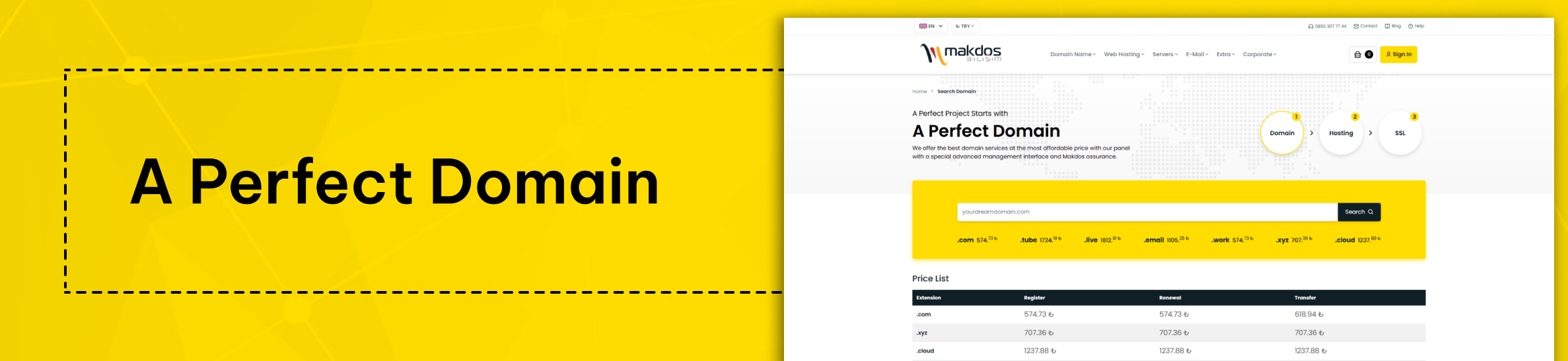
Makdos English domain pages highlight several useful capabilities. These include a dedicated domain search tool and easy DNS management. They also include an advanced administration panel and free internal transfers between customers.
Makdos also offers domain transfer workflows and notes that a transferred domain is generally extended by an additional year. For teams that want to centralize daily management, those features reduce friction after the purchase stage.
There is also operational value in keeping adjacent services close together. Makdos provides domain services, web hosting, corporate email, and SSL-related services within the same broader ecosystem. That can simplify the path from idea to launch.
You can handle naming, hosting, email, and site security without jumping between different dashboards. Makdos English pages specifically present domain services alongside hosting, email, and SSL offerings for that reason.
This matters most for the audience you specified: SMEs, e-commerce companies, enterprise brands, and agencies. These teams do not just need to know what a domain is. They need a provider workflow that helps them act on that knowledge with less overhead.
Conclusion: Your Domain Is the First Layer of a Stronger Digital Brand
A domain name is the start of digital ownership. It gives your business a recognizable identity, supports professional communication, and creates the foundation for websites, email, and service delivery. DNS is what makes it work, extensions shape perception, and the provider you choose affects how easy the system is to manage over time.
If you are evaluating a new project or cleaning up an existing setup, start with the name but do not stop there. Review the extension, ownership model, renewal process, hosting plan, email setup, and security basics as one connected decision.
Makdos is a practical fit when you want to find the right domain name. It also helps you manage the related hosting and email components within one service ecosystem. That makes it easier to move from idea to launch with fewer operational gaps.