
For most businesses, web hosting pricing can be confusing. The market ranges from entry-level shared plans to fully isolated dedicated infrastructure. First-time site owners, IT managers, and digital teams all face the same challenge. They need a solution that keeps the site stable without adding unnecessary cost.
That decision matters more than it looks. The right provider helps you publish quickly, stay secure, and scale when traffic grows. The wrong provider can create the opposite result: low entry pricing, slow performance, weak support, or expensive upgrades later.
What Actually Shapes Web Hosting Pricing?
Web hosting pricing is never arbitrary. It reflects the underlying infrastructure, the operating model behind the service, and the workload your website creates.
At the hardware level, several factors increase cost. These include stronger CPUs, more memory, SSD or NVMe storage, and resilient data center conditions. A provider can offer lower prices when many customers share the same machine. Prices increase when resources are more isolated or when performance expectations are higher.
Support and management layers also affect the bill. A responsive support team, a user-friendly control panel, backup tooling, and uptime-focused operations all require investment. Even license-based tools such as cPanel or Plesk can change the final package price.
Your website itself is another pricing variable. A simple company site and an online store do not create the same resource demand. The same is true for brochure pages versus WordPress websites with many plugins, multilingual content, or custom database queries.
Specific software needs usually increase hosting costs. In most cases, this also increases the monthly hosting price.
There is also the marketing layer. Some web hosting plans promote free domains, a website builder, free SSL certificates, or a money back guarantee. Those extras can be useful, but they should never be your only decision point. Cheap at checkout can mean expensive later if renewals rise or the hosting cannot handle your site properly.
Which Hosting Types Usually Cost More?
Among the common hosting types, shared hosting usually has the lowest entry cost. Cloud or VPS-style environments sit in the middle, while a dedicated machine usually comes with the highest cost. The best choice is not the most powerful option. It is the hosting option that matches your current workload and your next growth step.
Shared Hosting Plans and Shared Web Hosting
Shared hosting plans are usually the most affordable starting point because multiple accounts run on the same physical machine. In other words, the provider spreads costs across many customers. That makes shared web hosting a practical fit for brochure sites, early-stage company websites, and smaller digital projects.
The trade-off is shared resources. Because several accounts live on the same shared server, performance can fluctuate when usage patterns change. That does not automatically make shared hosting a bad choice. It simply means the model works best when traffic is predictable and the workload is moderate.
Virtual Servers and Cloud Hosting
Virtual servers and cloud hosting sit in the middle of the pricing ladder. They usually cost more than shared hosting but less than a fully isolated dedicated environment. The reason is simple: you receive more predictable resource allocation, more flexibility, and better room to scale.
For growing businesses, this can be the smartest step up. If your site has outgrown shared hosting limits, a virtual server is often the better next step. It offers more control and a better long-term balance.
Dedicated Infrastructure and the Physical Server Model
A physical server is the highest-control option because the hardware is reserved for a single customer. That means stronger isolation, more control, and more predictable performance under heavy workloads. It also means a higher monthly cost.
This type of web hosting is a good fit when your website, application, or database needs full control. It also makes sense when you expect heavy traffic or need stable performance. For many projects, it is unnecessary at the beginning. For critical workloads, it can be the right decision from day one.
A Simple Upgrade Rule
Stay on shared hosting when your site is simple, traffic is steady, and daily operations are simple.
Move to virtual servers when growth, campaign traffic, or custom software needs make shared limits visible.
Choose a physical server when performance isolation, deeper control, or security requirements become business-critical.
How to Compare Affordable Offers Without Sacrificing Quality
The cheapest monthly figure is rarely the full story. Reliable web hosting services should be evaluated over time, not only at the point of purchase.
Start with renewal logic. Many providers use aggressive entry pricing, then recover margin in later billing cycles. Compare the first invoice against the 12-month or 24-month total. Check whether backups, branded email, migration help, SSL, or support are included from the start or sold separately later.
Next, look at usability. If your team needs to move quickly, the control panel matters. A clean interface can save hours on routine work. This includes tasks such as database creation, domain setup, SSL activation, email account management, and application installation.
This is especially important for non-technical teams, agencies, and marketing-led projects.
You should also test the upgrade path. A good hosting package should not trap you. If traffic increases, you should be able to move to stronger infrastructure without rebuilding your operations from zero. That is why long-term value matters more than the lowest advertised number.
Finally, compare the service as an operating environment. Ask whether the provider explains its limits clearly and whether support is easy to reach when something goes wrong. Also check whether the plan fits the way your business actually works. Affordable hosting means paying for the right reliability, not just the lowest price.
A Practical Selection Guide for SMEs, E-commerce Teams, and Agencies
If you are choosing web hosting for the first time, the best starting point is not the feature list. It is your business scenario. The right type of web hosting depends on what your site does, how much traffic you expect, and how quickly you may need to scale.
If You Run a Small Business Website
A small business website usually does not need complex infrastructure at launch. For simple business websites and modest blogs, shared hosting is often enough. In that case, prioritize ease of use, clear support, branded email, backups, and security over raw power.
For faster publishing without developer support, look for one-click setup, a simple site builder, or easy CMS deployment. The important part is to keep the setup manageable without locking yourself into a weak platform.
If You Manage an Online Store or Resource-Heavier WordPress Websites
An online store increases the stakes. Product pages, checkout flows, database calls, media-heavy content, and campaign peaks all create higher load. The same is true for WordPress websites with many plugins, multilingual catalogs, or high-traffic landing pages.
In this scenario, first confirm that the provider supports your preferred content management system. Check for solid backups and tools that keep page speed under control. If your growth curve is uncertain, staying too long on a low-cost shared plan may create limits later. In that case, cloud-based infrastructure or virtual servers can be a safer choice.
If You Are an Agency or Enterprise Team
Agencies and larger teams often manage several domains, multiple websites, and different client requirements at once. For that reason, the cheapest hosting option may not be the most efficient one in practice. What matters is proper account separation and repeatable deployment. Support responsiveness and a clear upgrade path from smaller sites to more demanding environments also matter.
For these teams, comparing hosting types is less about “cheap versus expensive” and more about practical fit. A well-structured provider reduces friction, standardizes workflows, and makes future upgrades easier.
How Makdos Helps You Balance Cost, Control, and Growth
Makdos positions its web hosting offer around manageable setup, practical administration, and budget-friendly entry points. Its current web hosting and cPanel-based hosting pages present hosting as suitable for both small and large workloads. They also show that day-to-day operations do not have to become too much difficult.
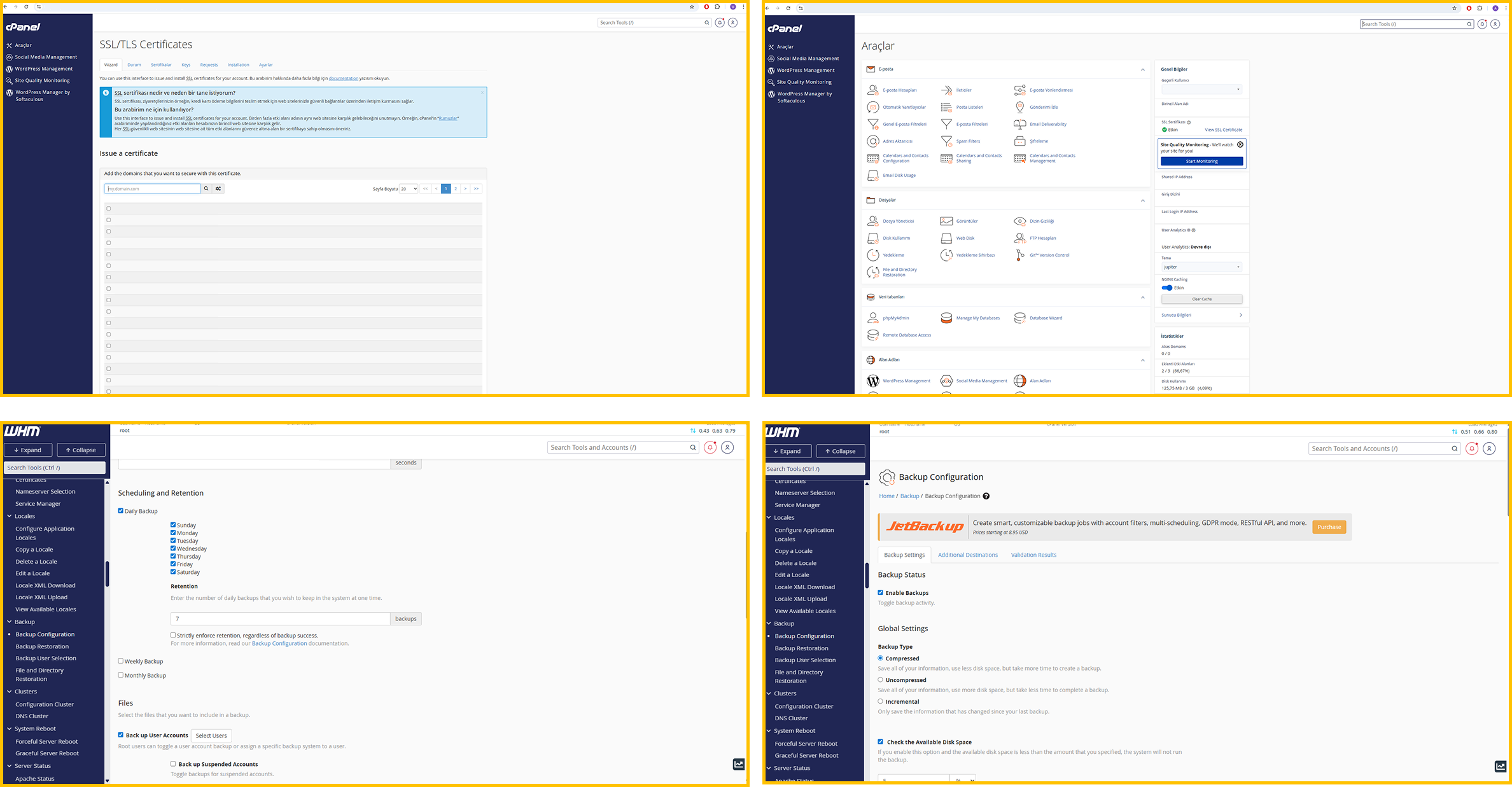
For teams that want simpler daily operations, Makdos cPanel hosting includes features designed to make routine work easier. These include free SSL, weekly backups, easy app installs, and WordPress management tools. They also include performance features such as nginx caching and LiteSpeed Web Cache Manager.
Makdos also describes its pricing as transparent. It also highlights 24/7 technical support, which matters when support quality is part of the buying decision.
The second advantage is stability. When shared hosting is no longer enough, Makdos also offers virtual servers and cloud server environments. These options provide scalable resources, panel-based management, backup choices, and greater flexibility. It gives businesses a smoother way to grow without changing providers.
For organizations that need maximum isolation, Makdos also provides dedicated infrastructure through its dedicated server service. This is the point where shared hosting may no longer be enough. Demanding applications, higher traffic, or stricter control needs can require fully allocated hardware instead.
In practice, that combination matters because it connects entry-level lower cost with a realistic upgrade path. Instead of treating web hosting as a one-time purchase, Makdos presents it as an operating model. It can start with a simpler plan and expand as business needs change.
Conclusion: Pay for Fit, Not for Hype
Web hosting pricing is shaped by infrastructure, support, software needs, and growth expectations. Shared hosting is usually the lowest-cost entry point. Virtual servers often provide the middle ground, while dedicated infrastructure costs more because it offers greater control and isolation.
The real goal is not to find the cheapest offer on the page. It is to find the environment that fits your current site, your team’s operating style, and your next stage of growth. When you evaluate web hosting this way, cost and quality stop being opposites.
To compare web hosting plans more effectively, first look at your real workload, then choose the hosting package that fits it. For businesses that want simple management today, Makdos offers options worth reviewing. Its web hosting, cloud, and dedicated solutions also provide a smoother upgrade path for the future.